Source car battery charging ground clamp for EVs, Trucks, and Generators
Compare 30 listings for car battery charging ground clamp options including aluminum and metal terminals. Buyers can evaluate specifications like plating, cable compatibility, and packing types from verified Chinese manufacturers.
Key considerations
Products List


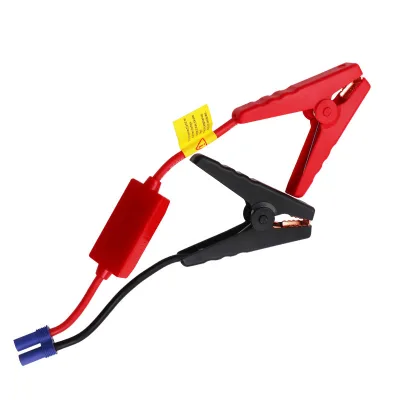


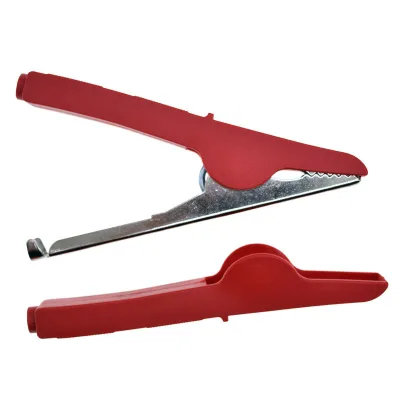


Comprehensive Sourcing Guide
Car Battery Charging Ground Clamp Sourcing Guide
Sourcing reliable ground clamps for car battery charging applications requires a nuanced understanding of the diverse product landscape available from global manufacturers. The term "car battery charging ground clamp" often encompasses a wide array of hardware, ranging from simple suspension-style clamps to heavy-duty, insulated connectors designed for high-current applications. Buyers must navigate a market where product listings frequently mix distinct categories, such as terminal connectors, C-clamps, and specialized battery cable accessories. This guide provides a structured approach to evaluating these products, ensuring that procurement decisions are based on verified technical specifications and commercial realities rather than ambiguous marketing language.
The primary challenge in this category is the lack of standardization in product naming and specification presentation across different suppliers. A single search result may list a "C Clamp" with a "suspension structure" alongside a "Battery Terminals Connector" with "frosted nickel plating," creating confusion about the actual component being offered. Effective sourcing begins with distinguishing between the mechanical fastening device and the electrical connection interface. By focusing on core functional attributes such as current capacity, material composition, and structural integrity, buyers can filter out irrelevant listings and identify components that genuinely meet the rigorous demands of automotive battery charging systems.
Product Scope and Observed Listing Signals
The observed product listings reveal a fragmented market with significant variation in product types, materials, and intended use cases. Listings indicate the presence of aluminum and plastic materials, with some products explicitly described as "Battery Terminals Connectors" while others are labeled as "C Clamps" or "Suspension Clamps." This diversity suggests that the search term captures both the mechanical clamp that secures the cable to the battery post and the terminal connector that interfaces with the charging cable itself. Buyers must carefully distinguish between these components, as a ground clamp for charging typically requires robust electrical conductivity and secure mechanical grip, often involving metal alloys rather than plastic housings alone.
Specific product attributes observed in the market provide critical signals for evaluation. For instance, some listings highlight "frosted nickel" plating, which is a common finish for corrosion resistance in battery terminals, while others specify "heavy duty" usage or "high temperature resistance." The presence of models like "Hx-Bt032" and "FK-408" indicates that manufacturers produce specific part numbers for these connections, often tailored to fit particular cable gauges such as "6*0/4ga" or "50-70" mm² ranges. Additionally, the observation of "6ways" cable configurations and "suspension clamp" structures points to specialized designs that may be necessary for specific vehicle architectures or charging station setups, rather than generic universal clamps.
Technical Specifications to Verify
When evaluating technical specifications, the material composition and plating quality are paramount for ensuring long-term reliability in high-current applications. Aluminum is frequently cited as a primary material, but buyers must verify if this refers to the clamp body or the terminal contact surface, as pure aluminum may lack the necessary conductivity or hardness for secure battery connections. The presence of "frosted nickel" plating is a positive indicator for corrosion resistance, but it is essential to confirm the thickness of the plating and the base metal underneath. Buyers should request detailed material certificates or cross-section analysis to ensure that the contact surfaces are not merely aluminum with a thin, ineffective coating, which could lead to high resistance and overheating during charging.
Current capacity and cable compatibility are critical technical parameters that must be explicitly verified before procurement. Listings mention standards such as "fit with power cable 6*0/4ga" and cable sizes like "50mm2," which provide a baseline for electrical performance. However, buyers must ensure that the clamp’s mechanical design can maintain a low-resistance connection under vibration and thermal cycling. The "suspension clamp" structure mentioned in some listings suggests a design that may offer flexibility or specific mounting advantages, but its suitability for ground connections must be assessed against the required holding force. Additionally, the "C clamp" design with a size of "320mm" indicates a larger, possibly industrial-grade component, which may be unsuitable for standard automotive applications but ideal for heavy-duty equipment or stationary charging stations.
Compliance and Safety Documentation
Safety in battery charging applications is governed by the need to prevent electrical shorts, overheating, and mechanical failure under load. While specific certification standards are not universally listed in the observed data, buyers must insist on documentation that verifies the product’s compliance with relevant electrical safety norms. This includes verifying that the insulation, if present, meets voltage ratings appropriate for the charging system and that the metal components are free from defects that could cause arcing. The "heavy duty" designation in some listings implies a higher safety margin, but this must be backed by engineering data or test reports rather than marketing claims alone.
Documentation should also cover the environmental durability of the components, particularly regarding temperature resistance and corrosion protection. The observation of "high temperature resistance" as a feature suggests that some products are designed to withstand the heat generated during high-current charging. Buyers should request thermal performance data to ensure that the clamp does not degrade or loosen under sustained load. Furthermore, the "frosted nickel" plating should be evaluated for salt spray resistance, especially if the charging equipment is used in outdoor or marine environments. Without explicit certification data, buyers must rely on supplier-provided test results or third-party verification to ensure that the product meets the necessary safety thresholds for automotive or industrial use.
Cost Drivers and Commercial Terms
The cost of car battery charging ground clamps is influenced by several factors, including material quality, plating thickness, and manufacturing complexity. Aluminum and metal components with specialized plating, such as frosted nickel, typically command higher prices than basic steel or uncoated alternatives. The "heavy duty" and "high temperature resistance" features observed in some listings suggest a premium product tier, which may involve more rigorous quality control and higher-grade materials. Buyers should expect price variations based on these specifications, with more robust, corrosion-resistant clamps costing more than standard, light-duty versions.
Commercial terms, including Minimum Order Quantity (MOQ) and packaging, also play a significant role in the total cost of ownership. Observed MOQs range from 4 to 10,000 units, indicating flexibility for both small-scale prototyping and large-volume procurement. Packaging options vary from "carton" and "box package" to "wooden case" and "neutral" packaging, which can affect shipping costs and handling requirements. For bulk orders, the choice of packaging may impact the unit price due to material and labor costs. Buyers should negotiate terms that align with their inventory needs, considering that higher MOQs may offer better unit prices but require greater storage capacity and capital outlay.
Supplier Qualification and Quality Control
Supplier qualification in this category requires a focus on manufacturing capability and quality assurance processes. Given the variation in product types, from "suspension clamps" to "battery terminals," buyers should verify that the supplier has specific expertise in producing the exact type of component required. The presence of multiple product models, such as "2601101506" and "Hx-Bt032," suggests that some suppliers offer a broad range of products, which may indicate a trading company rather than a specialized manufacturer. Buyers should prioritize suppliers who can provide detailed engineering drawings and material specifications for their specific models, ensuring that the product matches the intended application.
Quality control measures should include routine testing for electrical resistance, mechanical strength, and corrosion resistance. Buyers should request samples for initial evaluation and conduct their own tests to verify the claimed specifications, such as "fit with power cable 6*0/4ga" and "50mm2" cable compatibility. The "1 year warranty" mentioned in some listings provides a baseline for supplier confidence, but buyers should also inquire about the supplier’s defect rate and return policy. Establishing a clear quality agreement that defines acceptable tolerances for dimensions, plating thickness, and electrical performance is essential for maintaining consistency in large-scale procurement.
Long-Term Procurement Checks
Long-term procurement success depends on the ability to monitor supplier performance and adapt to changing market conditions. Buyers should establish key performance indicators (KPIs) for delivery times, product quality, and responsiveness to technical queries. The observation of "New Arrival" features in some listings indicates a dynamic market with frequent product updates, which may require buyers to stay informed about new technologies or improved designs. Regular audits of supplier quality systems and periodic re-evaluation of product specifications can help ensure that the sourced components continue to meet evolving safety and performance standards.
Additionally, buyers should consider the supply chain resilience of their suppliers, particularly given the concentration of origins in regions like Zhejiang, Tianjin, and Guangdong in China. Diversifying the supplier base or maintaining a buffer stock of critical components can mitigate the risk of supply disruptions. The "customized" standard option observed in some listings suggests that suppliers may offer tailored solutions, which can be valuable for specific applications but may require longer lead times. Buyers should balance the benefits of customization with the need for reliable, standardized supply, ensuring that their procurement strategy supports both current operational needs and future growth.
FAQs
What materials are used for car battery charging ground clamps?
These clamps are constructed from aluminum, metal, or plastic depending on the specific model. Some units feature a frosted nickel plating for enhanced durability and corrosion resistance during heavy-duty operations.
Can I find customized specifications for these battery terminals?
Yes, customization is available for various product models and standards. Buyers can request nonstandard configurations or specific cable connections like 6*0/4ga to match their unique power cable requirements.
Which packaging options are available for bulk orders?
Packaging varies by product type and includes carton, box package, bulk, or wooden case options. Some items are shipped in neutral packaging to suit different distribution needs and storage requirements.
How do I verify the cable compatibility for these clamps?
Compatibility is determined by specific standards such as fit with power cable 6*0/4ga or 50mm2 cable sizes. Ensure the selected model matches your cable connector requirements like 50-70 for optimal performance.
What is the minimum order quantity for these products?
The minimum order quantity ranges from 4 to 10000 units depending on the specific supplier and product model. Some listings specify an MOQ of 10 pieces for single item sales or larger batches.
Where are these battery charging clamps manufactured?
Products originate from various locations in China including Zhejiang, Tianjin, Guangdong, and Changzhou. The specific place of origin depends on the manufacturer and the particular model number selected.
Do these clamps offer protection for the battery?
Yes, the primary function includes power connection, stable current, and protection for the battery. They are designed as heavy-duty clamps with high temperature resistance for reliable suspension and usage.